
#32 Does talking about our differences force us further apart or ultimately bring us closer together.
Exploring the language of sameness, silence, and connection.

Editor’s note: Before I get into this month’s topic, I wanted to acknowledge my little hiatus. I’m sure most readers won’t even have noticed - and new readers (hey 👋🏾) probably won’t care - but I feel compelled to mention it!
For 29 months straight, I’ve been consistent in publishing this newsletter, and while writing 2,000-odd words every four weeks doesn’t sound like much, add in a full-time freelance role, caring responsibilities for my lovely parents, and life’s inevitable ups and downs, and something had to give. This time, it was the newsletter. I may take similar breaks in the future, but I wanted to say a sincere thank you for sticking with me. I hope you find this month’s edition worth the wait. 💛
Celebrating diversity or driving division?
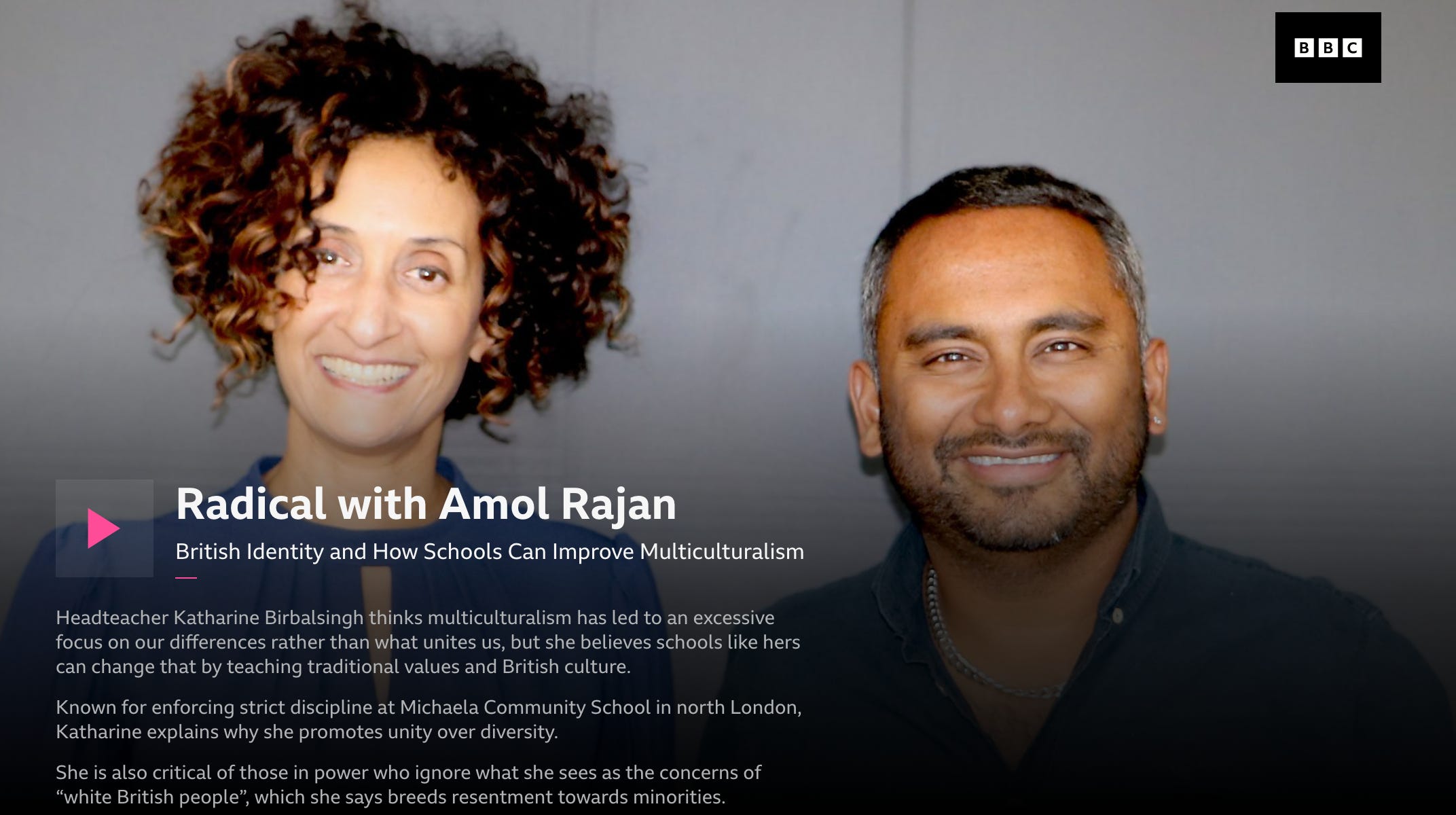
This question was initially sparked by a Radio 4 interview with Katharine Birbalsingh, Headteacher1 of a school in north London.
In the interview, Birbalsingh - who identifies as mixed race - argued that multiculturalism has led to an excessive focus on our differences rather than what unites us, and that schools can counter this by teaching traditional values and British culture. She also believes that those in power have ignored what she calls the concerns of “white British people,” which she says breeds resentment towards minorities.
I’ll admit, I listened through gritted teeth. But a few days later, I came across a letter in The Sunday Times calling for all faith and single-sex schools in the UK to be abolished - for reasons not dissimilar to Birbalsingh’s. As the (very happy) product of a secular, single-sex school it gave me pause for thought and so I wanted to use this month’s newsletter to process my thoughts with you.
Needless to say, I have so many thoughts and I hope you’ll join me in the comment section to share yours.
Setting out the case for diversity
For me, starting conversations about DEI with the “D” has always felt a little nonsensical.
Diversity, in most English-speaking nations, is already a fact. Our countries - or at least our cities - are typically multicultural. The issue is that this reality isn’t always reflected in the workforce, meaning many organisations still don’t look like the communities they serve.
These often stark gaps have led - in my humble opinion - to an overemphasis on diversifying the workforce, sometimes at the expense of addressing what really matters: how people are treated once they’re inside.
In my experience, a focus on numbers alone doesn’t always lead to meaningful or sustainable change. However, when organisations prioritise building inclusive cultures, those from marginalised and underrepresented backgrounds are more likely to thrive and the diversity of thought these varied backgrounds bring are proven to lead to stronger business outcomes. I could leave the conversation here but I feel like I’ve not even scratched the sides. Let’s plough on!
The case for treating everyone the same
Treating everyone the same, in the name of fairness, has an intuitive appeal. It feels neat, simple, even noble. But difference exists and we all know it and pretending it doesn’t - in classrooms, workplaces, or friendships - doesn’t make it disappear.
It’s often said that when the USA sneezes, the UK catches a cold - and we’ve certainly developed our own virulent strain of that country’s hyper-polarised political discourse. In recent years, the rise of a new populist, far-right front has shifted the tone of our public conversation. We’ve seen the normalisation of anti-immigrant rhetoric and an uneasy reclaiming of symbols like the St George’s Cross - framed as patriotism but often used as a quiet2 assertion of “us” versus “them.”
In such an atmosphere, many people have grown weary of what they may term “difference talk.” They see it as divisive, exhausting, even dangerous. Better, they argue, to focus on what unites us; the things we all share.
But that logic, while comforting, can easily become a form of avoidance. When we say, “I don’t see colour,” or “We’re all just human,” we might mean equality but what it does is lead to erasure and the minimisation of important discussions. It can also quietly, but effectively, suggest that your experience doesn’t belong here.
Not all differences are visible, and so forgive me for defaulting to physical difference to make this point: even in our imperfect societies, few would dream of removing wheelchair ramps or other forms of step-free access under the guise of treating everyone the same. These valid and vital physical accommodations allow everyone to participate fully in civic life. They’re not something we should have to think about or give thanks for - they’re the bare minimum one should expect.
When ramps are implemented, town planners often note that they’re used not only by wheelchair users, but also by people with prams3 and anyone who finds stairs a challenge. In other words, inclusivity benefits everyone, not just those it’s designed for. True fairness doesn’t come from sameness; it comes from seeing difference clearly, and designing with it in mind.
Am I making you feel uncomfortable? Good.
To circle back to Birbalsingh, central to her belief is the idea that talking about difference breeds resentment towards minorities. I find this argument as troubling as the claim that men and boys are now “left behind” in a world shaped by women’s progress.
Both narratives share the same flawed logic: that equality is a zero-sum game - that if one group gains, another must inevitably lose. The inference, in both cases, is that inclusion has gone “too far.”
But progress for one group doesn’t cause the struggle of another. Correlation isn’t causation. Men’s disenfranchisement isn’t the fault of women’s advancement, just as the challenges faced by white or working-class communities aren’t caused by immigration or efforts to promote diversity. These struggles are rooted in broader social and economic inequities, not in who else is finally being invited to the table.
Blaming the pursuit of inclusion for inequality is a comforting fiction, it points the finger sideways rather than upwards.
Sometimes the language associated with DEI does us no favours
Words shape the space between us. The vocabulary we use around difference - diverse, inclusive, minority, marginalised - isn’t neutral. Each word carries its own hierarchy of belonging.
As an example; sometimes our well-meaning attempts to include can still reinforce separation. Phrases like “giving voice to the voiceless” imply that power sits with the giver. But what if we approached it instead of listening to those already speaking?
From division to dialogue
Maybe the question isn’t whether talking about our differences divides us or unites us, but how we do it.
Do we talk at one another, using labels as shields? Or do we talk with one another, asking what lies beneath the words?
When done well - with humility, listening, and a genuine wish to understand - conversations about difference can deepen connection, not fracture it. They remind us that belonging isn’t about sameness, but about being seen and heard as we are.
So perhaps unity doesn’t come from ignoring difference, but from learning how to hold it honestly and in true partnership.
Unity in our diversity
On balance, I net out at a place where I think two things can be true at once; we can look for our commonalities whilst also acknowledging and yes, celebrating what makes us different. I call this; unity in our diversity and that’s what I chose to celebrate - being part of a society whilst also acknowledging what makes me, me.
I don’t usually include a ‘call to action’ despite my marketing background BUT I would love to hear your thoughts in the comments below.
October Cultural Recommendations:
📻 LISTEN to We have Notes with Liv Little and Miranda Sawyer.
This is a relatively newish pop culture podcast hosted by the Observer journalists Liv Little and Miranda Sawyer and so I don’t have a particular episode to recommend, but if you are looking for nuanced and well rounded commentary about the cultural that surround us - then this would be a great addition to your rotation.
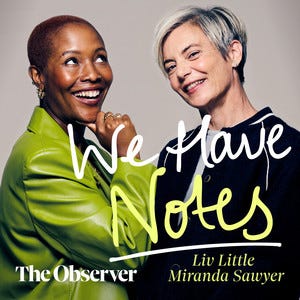
You can listen to We have Notes on Apple Podcast and Spotify
📺 WATCH: This super short TikTok about the “Mo Salah effect”
Don’t worry you don’t need to know anything about the English Premier League to watch this. It’s a short excerpt from The Joe Marler sports podcast and in a simple 52 seconds demonstrates how proximity can help minimise prejudice and hate crime.

Watch it here
Donation match:
In my July newsletter, I launched a donation-match to help alleviate the ongoing suffering, famine and displacement across Gaza.
How it works: If you donate to one of the charities below (or anyone else accredited) and send me a screenshot of your donation to my Instagram account @_languagematters, I will match your donations to a total of £300.00.
When I published this in my last newsletter, I received one screenshot for £50 and so I would love to extend this until the end of the month so that we can give a combined donation of £600. Thank you to that kind reader for that donation.
PCRF - Palestine Children’s Relief Fund Note: Removed as no longer taking donations.
World Central Kitchen - a charity who have suffered enormous personal loss and continue to try to do what they can from their field kitchen in Deir al-Bala, Gaza, Palestine.
Standing Together - a joint Palestinian and Israeli initiative that advocates for peace, equality, social and climate justice for everyone in the region.
As ever, thank you as ever for reading this little newsletter. If you like what you’re reading, please consider sharing it with someone you think would appreciate it too. If you have the time to ‘like’ it by clicking the ♡ that would mean a lot to me, as it’ll help more people see it.
Until next month, take care of yourselves 💛 and each other,
A ‘Headteacher’ is the equivalent of a High School Principle in North America.
“Quiet” and “not so quiet” assertion. You can read more about the recent English flag phenomenon here.
Strollers for my non-British readers.
Lots to think about, but I tend to agree that unity and celebrating diversity makes sense. Being interested in people who are different from me comes naturally, and I often wonder why difference is such a threat to some.
I’m glad you’re back, Sadia - and of course always prioritize taking a break when you need it! Sounds like you have a lot to balance at the moment.
When people complain about certain groups getting too much special treatment, it reminds me that we really don’t grow out of our toddler desire to make sure that everything is “fair.” But that’s just it - treating everyone the exact same way is not fairness. There are other considerations to take into account.